favicon

Are Bi Metallic Copper Lugs the Smart Choice for Power Links?

Most electrical failures don’t start with cables.
They start at the connection point quietly, invisibly, and often too late to detect.

Here’s the uncomfortable truth:
Even a perfectly designed power system can fail if the connector isn’t engineered for real-world conditions.

This is exactly where bi metallic copper lugs are changing the game.
They’re not just connectors anymore they’re becoming critical control points for power reliability.


What Exactly Are Bi Metallic Copper Lugs?

At first glance, they look simple. But the engineering behind them is anything but basic.
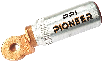
Bi metallic copper lugs are designed with:

  • A copper barrel for high conductivity

  • An aluminium palm for compatibility with aluminium busbars

The two are bonded using high-pressure friction welding, creating a molecular-level bond.

This eliminates:

  • Air gaps

  • Weak interfaces

  • Resistance fluctuations

That’s why they are widely used as bi metal compression lugs in critical electrical systems.

The Science Behind Their Performance (Rare Insight)


Here’s something you won’t find in most blogs:
The effectiveness of bi metal lugs depends on three hidden factors:

  1. Contact Surface Integrity
  2. A perfectly machined surface ensures maximum current flow without interruption.

  3. Grain Structure Alignment
  4. High-quality manufacturers control the internal structure of metals to reduce micro-resistance.

  5. Pressure Distribution During Crimping
  6. Uneven pressure leads to failure this is why bi metallic crimping lugs must be precision-engineered.

This level of detail is what separates average products from high-performance industrial cable jointing solutions.

The “Invisible Failure Zone” in Electrical Systems

Ask most engineers where failures happen, and they’ll say overload, insulation, or external damage.
But in reality:
Over 60% of electrical inefficiencies originate at joints and terminations.
Why?
Because when copper meets aluminium, something subtle but destructive begins:

  • Micro-level corrosion

  • Gradual resistance buildup

  • Heat generation under load

This is called electrochemical incompatibility and it’s one of the least discussed issues in power systems.
Bi metallic cable lugs are specifically designed to eliminate this exact failure point.

What Makes Bi Metallic Copper Lugs a “Future Technology”?


Most people think these are just metal connectors. That’s outdated thinking.
Modern bi metallic copper lugs are engineered using:

  • Friction welding (molecular-level bonding)

  • Precision-machined surfaces

  • Anti-oxidation coatings

This creates a zero-gap transition between metals something traditional connectors simply cannot achieve.
That’s why they’re widely used as bimetallic connectors in high-load environments.

The “Thermal Expansion Problem” Nobody Talks About

Here’s a rarely discussed issue:
Copper and aluminium expand at different rates when current flows.
In standard connectors, this leads to:

  • Loosening over time

  • Micro gaps

  • Arcing and overheating

But bi metal compression lugs are designed to absorb this difference, maintaining:

  • Constant pressure

  • Stable conductivity

This makes them ideal for power transmission connectors where load fluctuation is constant.

bi metallic copper lugs

Why Bimetallic Lugs for Copper Cable Are Becoming Standard


When industries use bimetallic lugs for copper cable, they’re not just solving a compatibility issue they’re optimizing the entire system.
These lugs:

  • Reduce voltage drop

  • Improve current flow stability

  • Prevent terminal damage

This is why they’re now considered essential in industrial cable jointing solutions.

Where These Lugs Truly Prove Their Worth


You’ll rarely hear this in basic blogs, but bi metallic crimping lugs perform best in:

  • High-load industrial plants

  • Solar farms (temperature fluctuation zones)

  • Railway electrification systems

  • Data centers (where failure is not an option)

In such environments, even a minor connection issue can cause:

  • Downtime

  • Financial loss

  • Safety hazards

That’s why engineers now prefer bi metal connectors over traditional solutions.

The Hidden Cost Advantage (Beyond Price)

Most buyers compare only product cost. Smart engineers look deeper.
Here’s what bi metal lugs actually save:

  • Reduced maintenance cycles

  • Lower energy loss due to stable conductivity

  • Fewer system failures

  • Longer equipment lifespan

Over time, they become one of the most cost-efficient upgrades in any electrical system.

Why Pioneer Power International Leads This Space


Among all bi metallic lugs manufacturers in India, very few focus on engineering depth + consistency.
Pioneer Power International stands out because they don’t just manufacture, they engineer performance.
What Makes Them Different:

  1. Precision Bonding Technology
  2. Ensures strong copper-aluminium integration with zero weak points.

  3. Consistent Quality Output
  4. Unlike many suppliers, every batch maintains uniform standards.

  5. Trusted in Critical Applications
  6. Widely preferred as a bi metallic lugs supplier for demanding industries.

  7. Strong Local Presence
  8. Recognized among top bi metallic lugs manufacturers in Mumbai, ensuring accessibility and reliability.

  9. Designed for Real Conditions
  10. Their electrical bimetallic terminals are built for heat, load, and environmental stress, not just lab conditions.

The Shift: From Components to “Connection Intelligence”


Here’s a perspective most competitors miss:
Electrical systems are moving from hardware-focused to performance-focused.
This means:

  • Every connection must be optimized

  • Every component must contribute to efficiency

Bi metallic copper lugs are a key part of this shift.
They’re no longer just accessories, they’re becoming performance-critical components.

Common Industry Mistakes (That Still Happen)

Even today, many systems fail because of:

  • Using standard lugs for mixed-metal connections

  • Ignoring thermal expansion differences

  • Choosing low-quality suppliers

  • Improper crimping techniques

This is why selecting the right bi metallic lugs manufacturers in India is as important as the product itself.

Are Bi Metallic Copper Lugs the Future?


Not just the future, they're quickly becoming the present standard.
As industries demand:

  • Higher efficiency

  • Better safety

  • Lower downtime

…the adoption of bi metallic copper lugs is accelerating.

If you want:
  • Reliable power links

  • Long-term performance

  • Reduced system risk

Then bi metallic copper lugs are not just a smart choice, they're a necessary upgrade.
With trusted names like Pioneer Power International leading innovation, the future of power connections is already here.

Frequently Asked Questions:

What is an example of a bimetal?

A common example of a bimetal is copper and aluminium bonded together, often used in bimetallic lugs for electrical connections.

How is bimetal made?

Bimetal is made by bonding two different metals together through processes like welding, rolling, or cladding to combine the benefits of both materials.

Are bimetallic strips still used today?

Yes, bimetallic strips are still used today in thermostats, circuit breakers, and temperature control devices because they respond to heat changes effectively.

What two metals are used in a bimetallic strip?

Two common metals used in a bimetallic strip are brass and steel, or copper and iron, chosen because they expand at different rates when heated.